( Blog · guides and tutorials )
Audio-Editor Online Blog
Tips, tutorials, and news about audio editing, file conversion, and online tools
( Every guide )
All guides
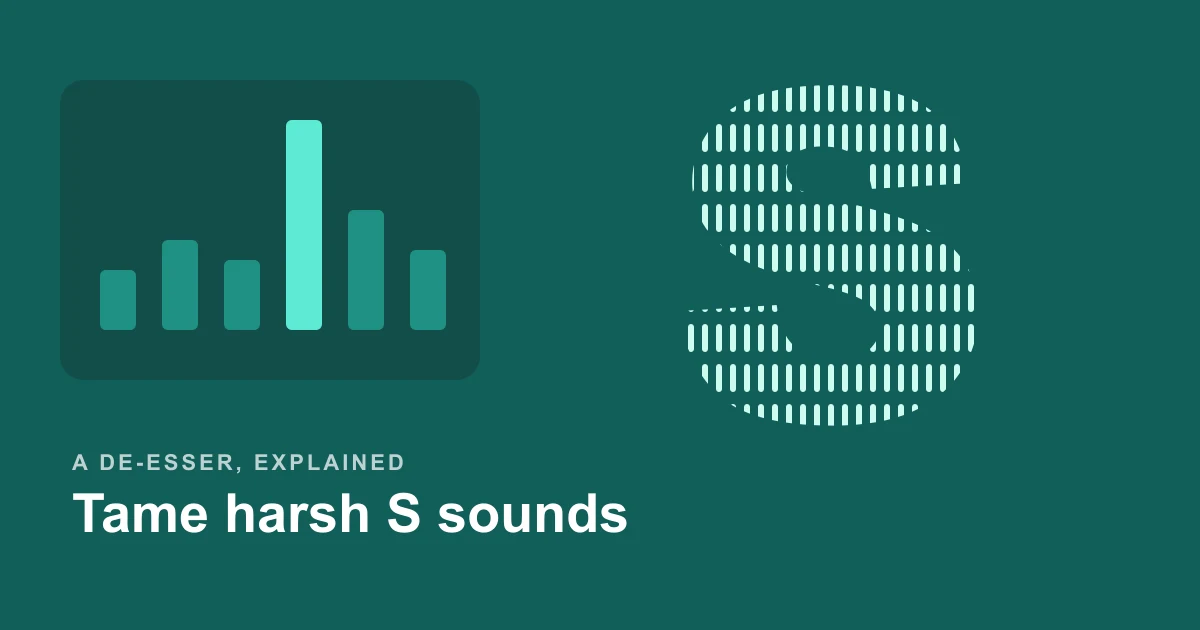
How to Reduce Sibilance in Audio: Taming Harsh S Sounds with a De-Esser
Why S sounds turn harsh, how a de-esser cuts only the 4–9 kHz band during each S, and how far to go. Measured: S band down 3.2 dB, vowels unchanged.
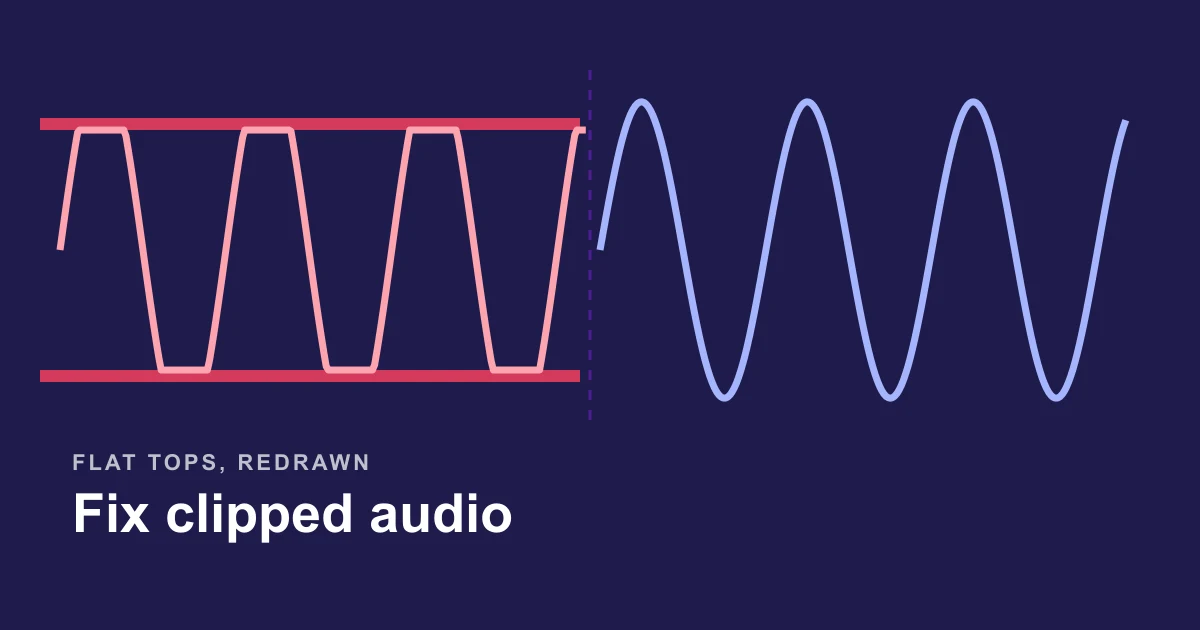
How to Fix Clipped Audio: Repairing Digital Saturation and Distorted Peaks
How to spot digital clipping, why it sounds harsh, and how a declipper redraws flat peaks. Measured on a clipped voice: flat tops from 11.6% to 0.05%.
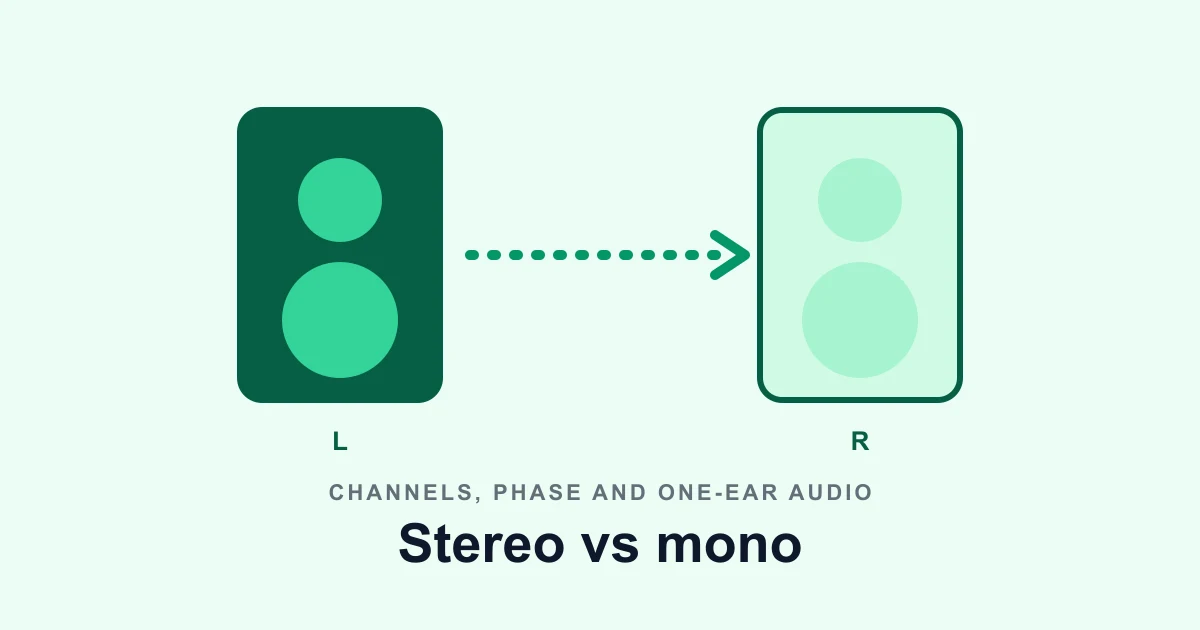
Stereo vs. Mono Audio: Understanding Phase Cancellation, Pan Law, and Mix Balance
When to use stereo or mono, how phase and pan law affect a mono mix, and how to fix one-ear recordings. Measured: silent channel from −93.2 to −17.5 dBFS.
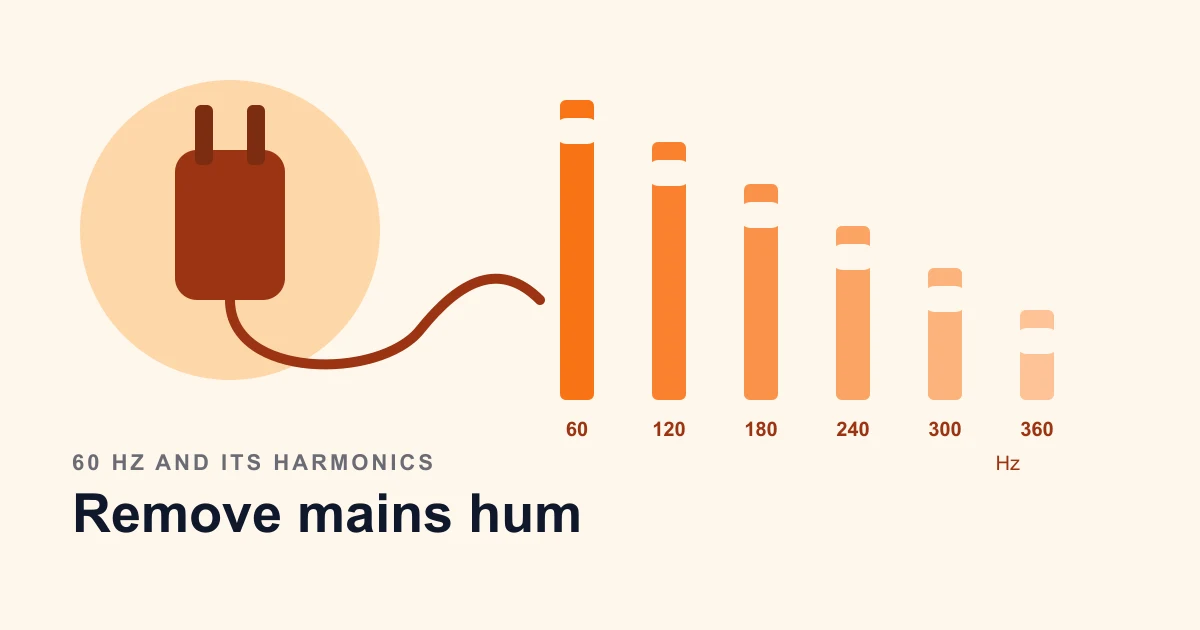
How to Remove 50 Hz and 60 Hz Hum from Audio: Mains Hum & Ground Loops Explained
Find 50 or 60 Hz mains hum, learn why ground loops cause it, and remove it with notch filters. Measured: 60 Hz hum down 40.9 dB, speech band unchanged.
How to Remove Plosives and Mic Pops from Audio: Physics, Pop Filters & Dynamic De-Plosive
Why P and B pop on the microphone, how a de-plosive filters only the bursts, and how to prevent them. Measured: thump band down 8.0 dB on six pops.
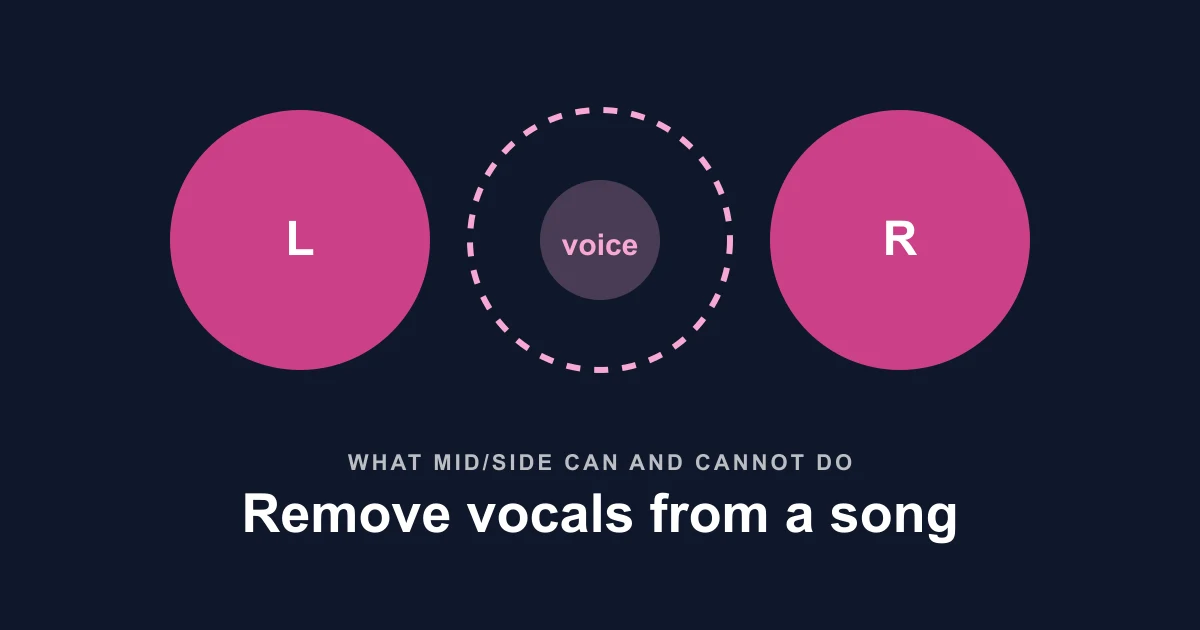
How to Remove Vocals from a Song: Phase Cancellation, Center Channel & Instrumental Creation
How mid/side cancellation removes a centred vocal, why it never fully disappears and why the result fails on mono speakers. Measured: voice down 5.5 dB.
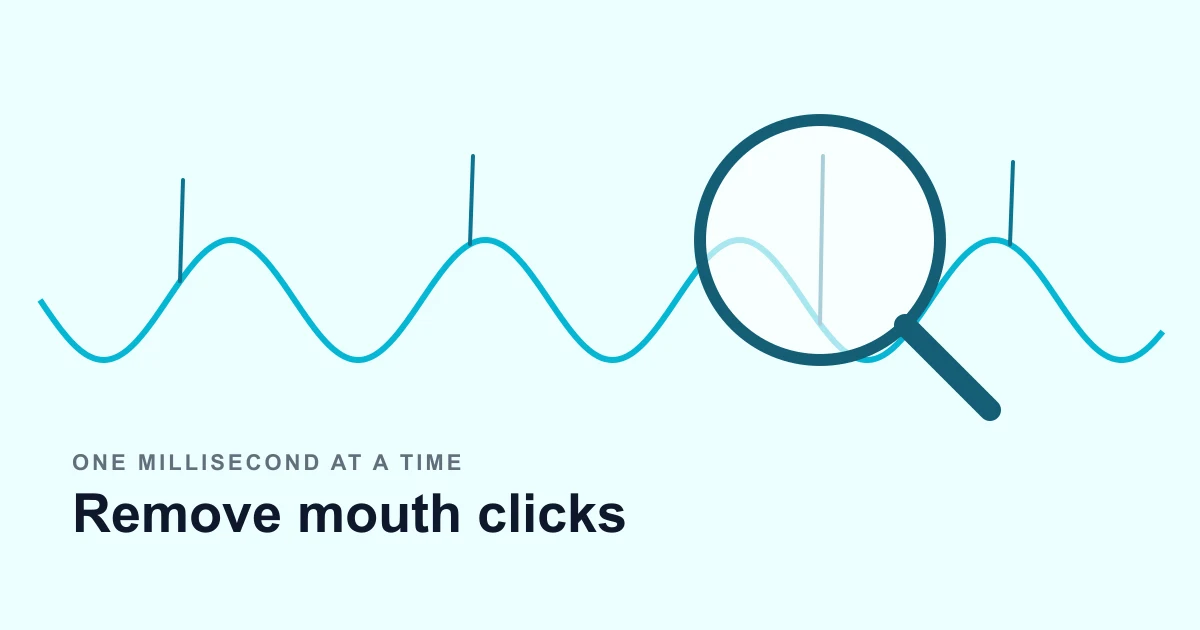
How to Remove Mouth Clicks and Pops from Audio: Causes, De-Clicking & Vocal Hydration
Where mouth clicks and vinyl ticks come from, how a de-clicker finds them, and how to remove them without dulling consonants. Measured: 9 clicks removed.
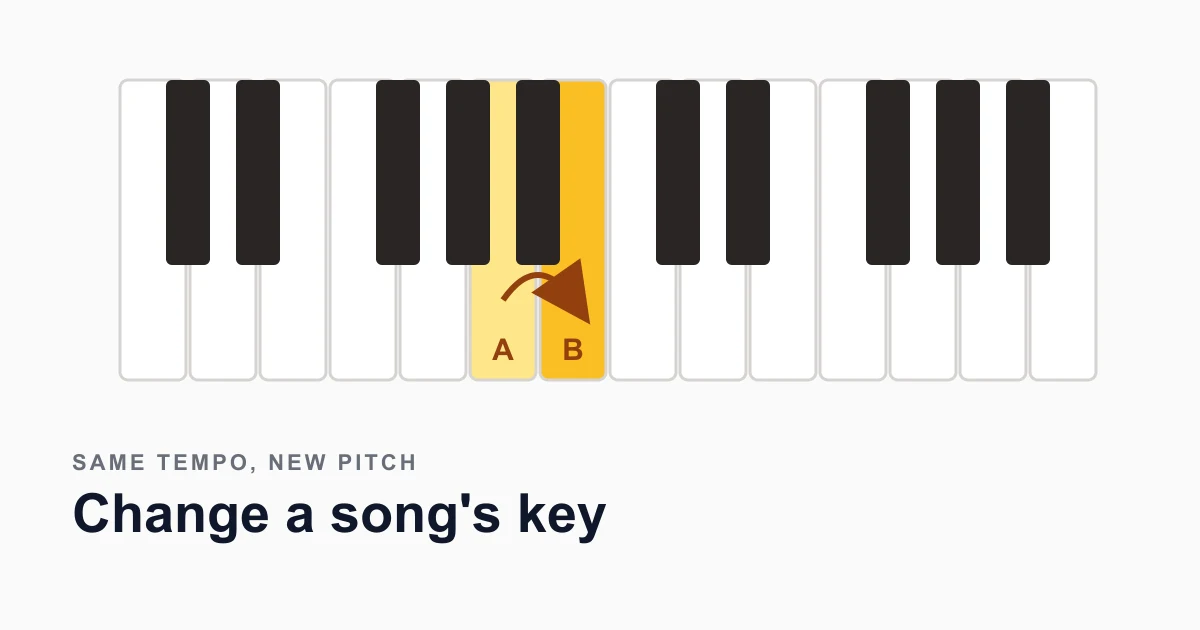
How to Change Song Key Without Changing Tempo: Pitch Shifting & Musical Transposition
How semitones and cents work, why pitch shifting needs time-stretching, and how to transpose a song in the browser. Measured: 440 Hz to 494.0 Hz, same length.
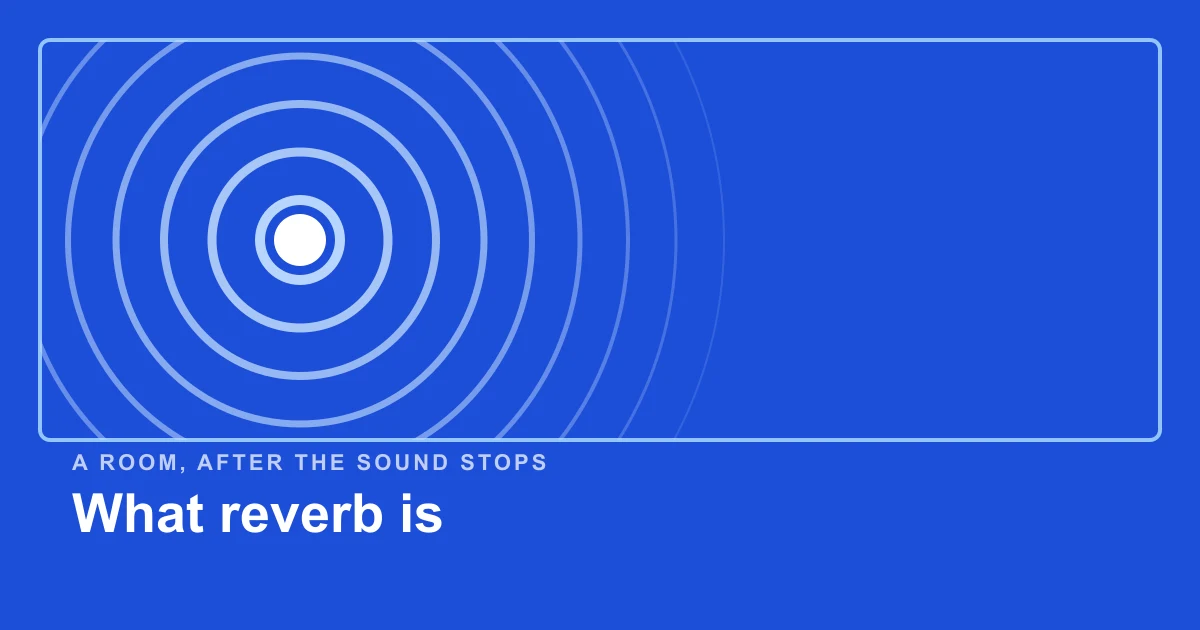
What Is Reverb in Audio? Acoustics, RT60, Pre-Delay & Convolver Physics Explained
What reverb is, what RT60, pre-delay and damping change, and how much to add. Measured: a 2 s reverb made a 5.95 s voice 7.95 s long, tail included.
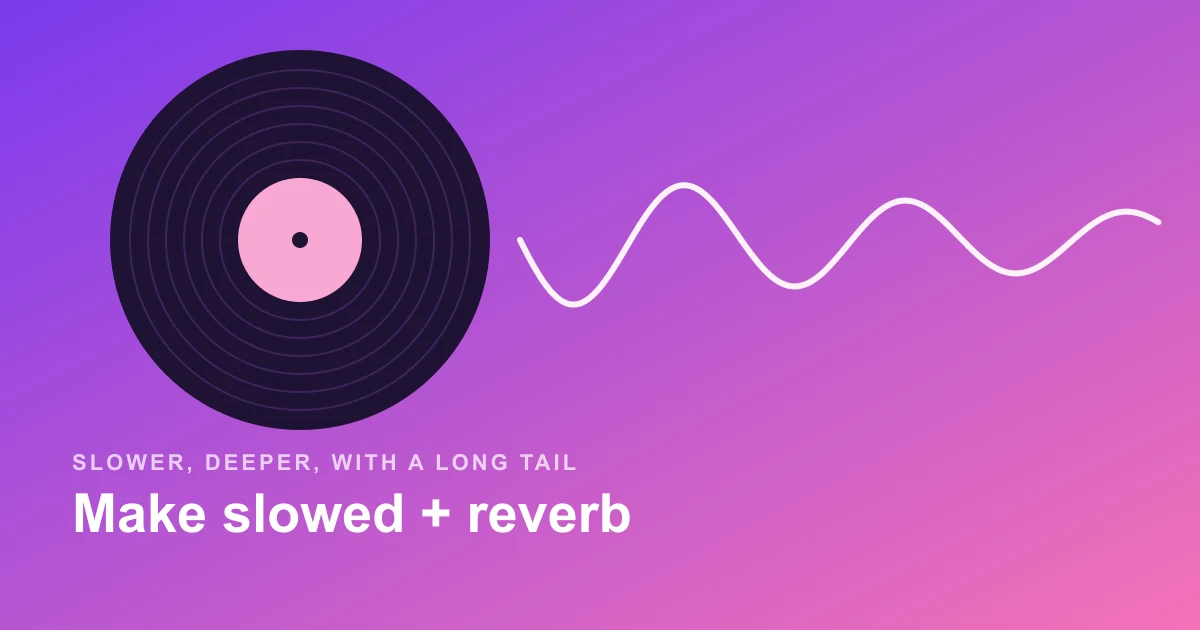
How to Make Slowed + Reverb Audio: Physics, Resampling & Aesthetic Mixing Guide
How slowed + reverb edits work, why 0.85× speed lowers the pitch 2.81 semitones, how to make one and the rights question. Measured: 6 s became 9.86 s.
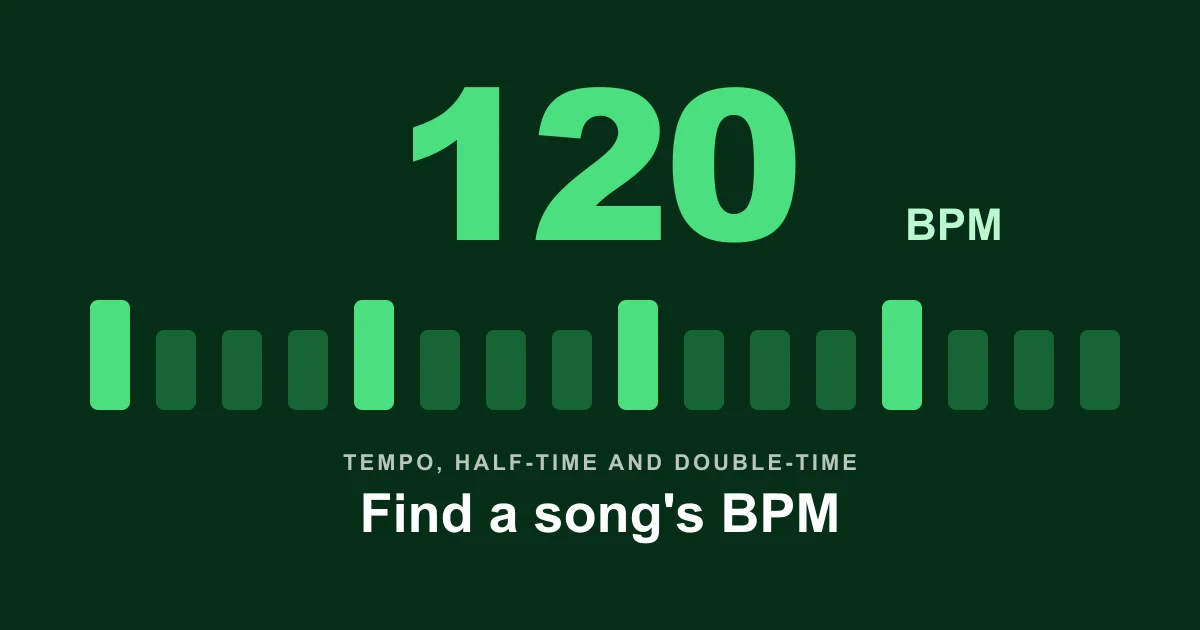
How to Find the BPM of a Song: Tempo Detection, Spectral Flux & Autocorrelation
How tempo detection works, why it lands on half or double time, and how to confirm with tap tempo. Measured: 119 BPM reported for a 120 BPM loop.
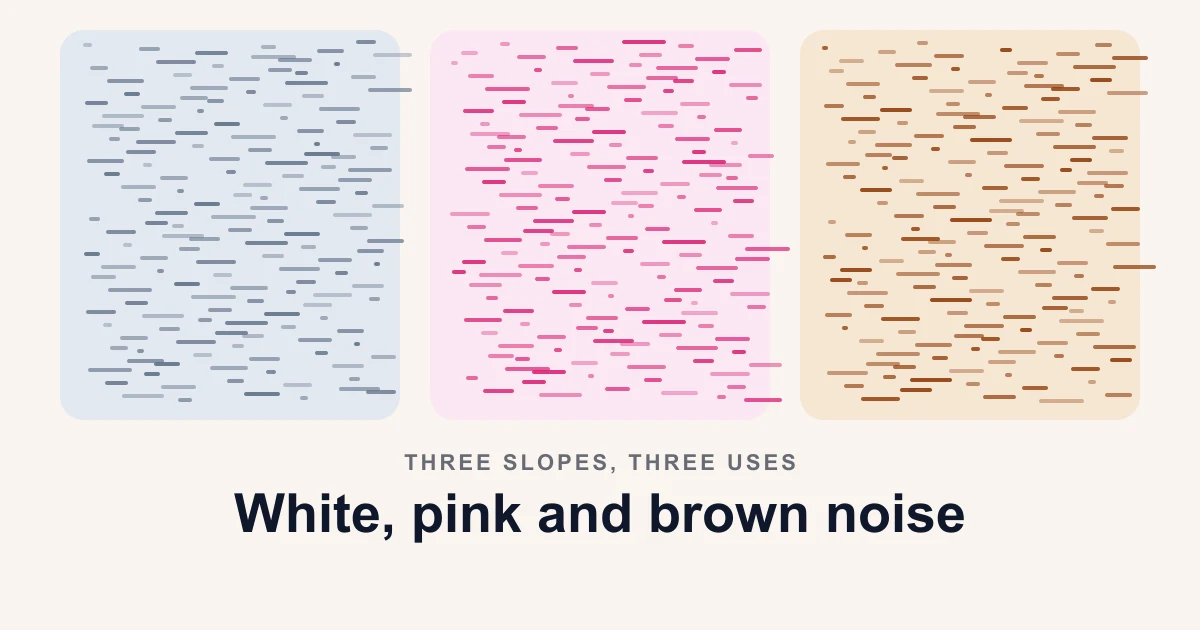
White, Pink & Brown Noise Explained: Acoustic Physics, Spectral Slopes & Audio Calibration
What white, pink and brown noise are in numbers, which suits sleep, focus or testing, and how to download loops. Measured slopes: −0.06, −3.03 and −5.42 dB/oct.
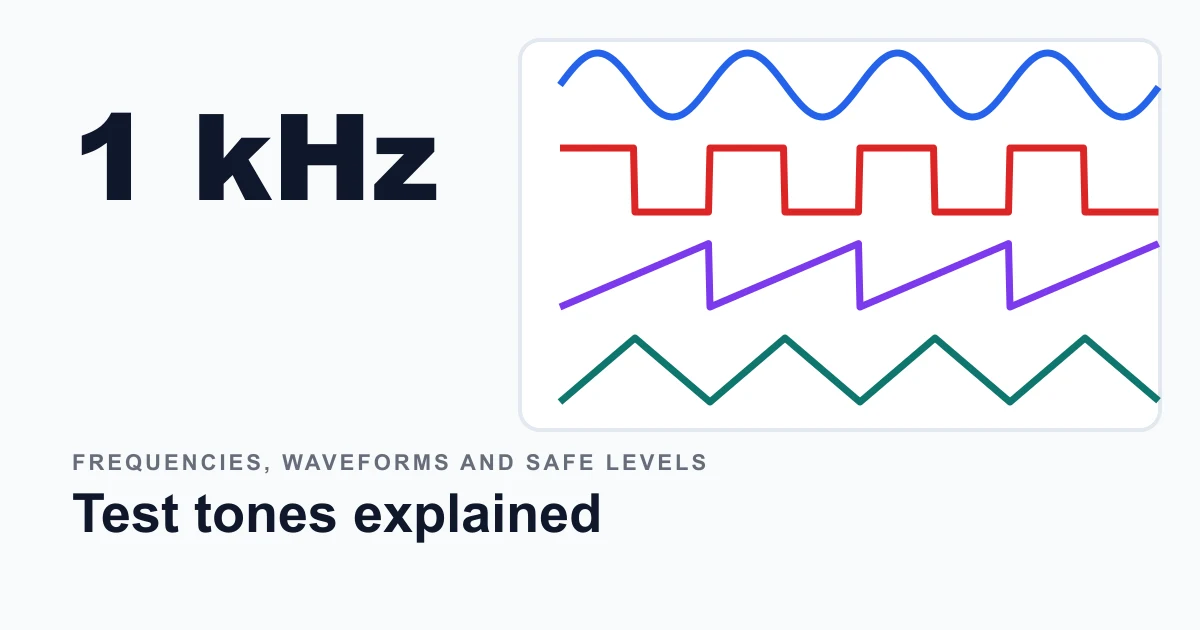
Audio Test Tones & Frequency Guide: Sine, Square & Harmonics in Acoustics
Which test tone to use for which job, what sine, square, sawtooth and triangle waves contain, and how to use tones safely. Measured: 1,000.0 Hz at −24.0 dBFS.
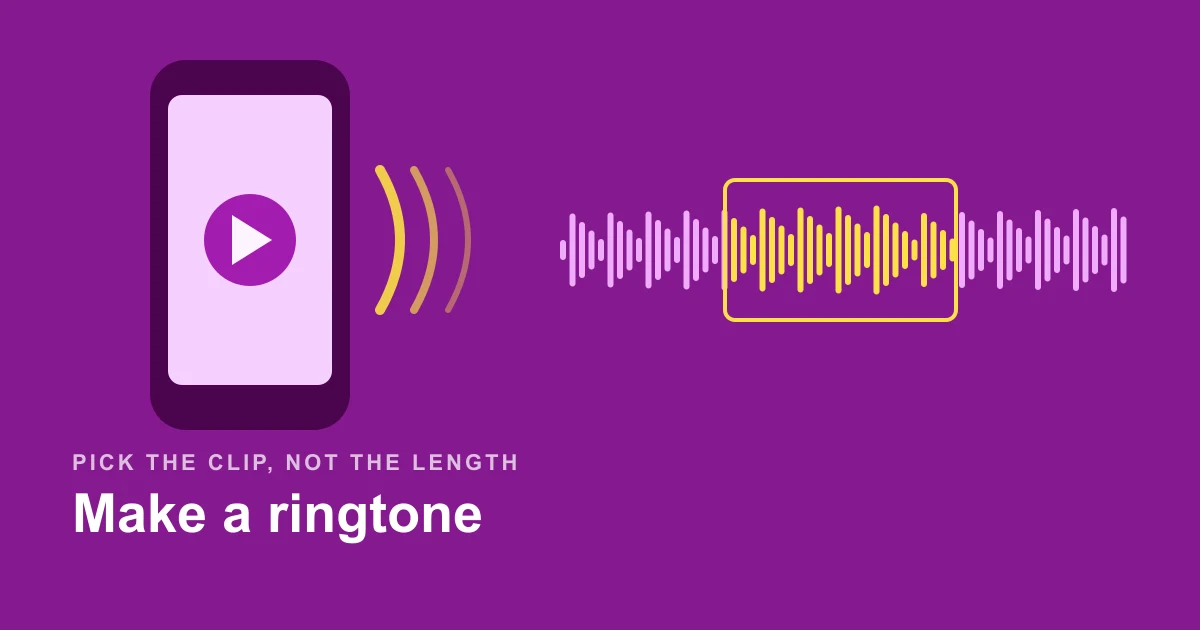
How to Make a Custom Ringtone: iOS M4R vs Android MP3, Trimming & Audio Physics
Choose the right clip, keep it under 40 s for iPhone, add fades and download M4R or MP3, then install it. Measured: a 15 s clip is 360.6 KB as MP3, 224.6 KB as M4R.
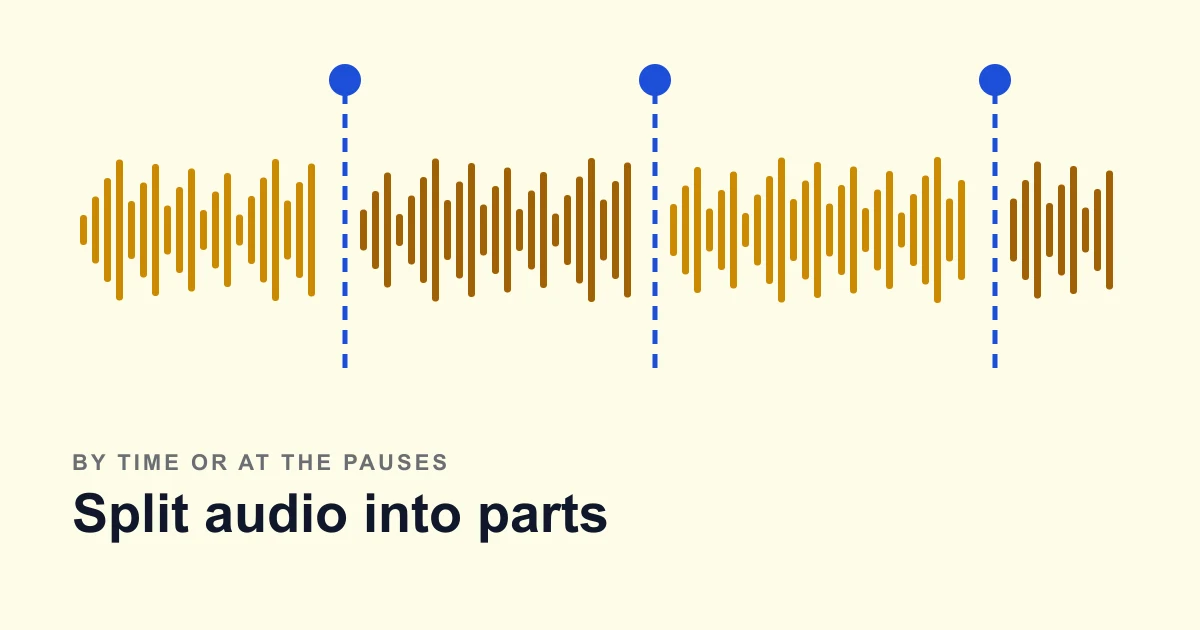
How to Split Audio Files: Silence Detection, Equal Chunks & Lossless Export
Split a recording by equal length or at the pauses, choose the threshold, and size the parts for upload limits. Measured: 3 phrases found and cut inside the pauses.
How to EQ Voice, Music and Podcasts Online
A practical online EQ guide for voice, music, podcasts, lessons and phone recordings. Learn bass, mids, treble and safe equalizer settings.
LUFS Audio Volume Guide for Podcasts, Videos, Lessons and Music
Understand integrated loudness and true peak, how to measure and normalize LUFS online, and verify current platform delivery requirements.
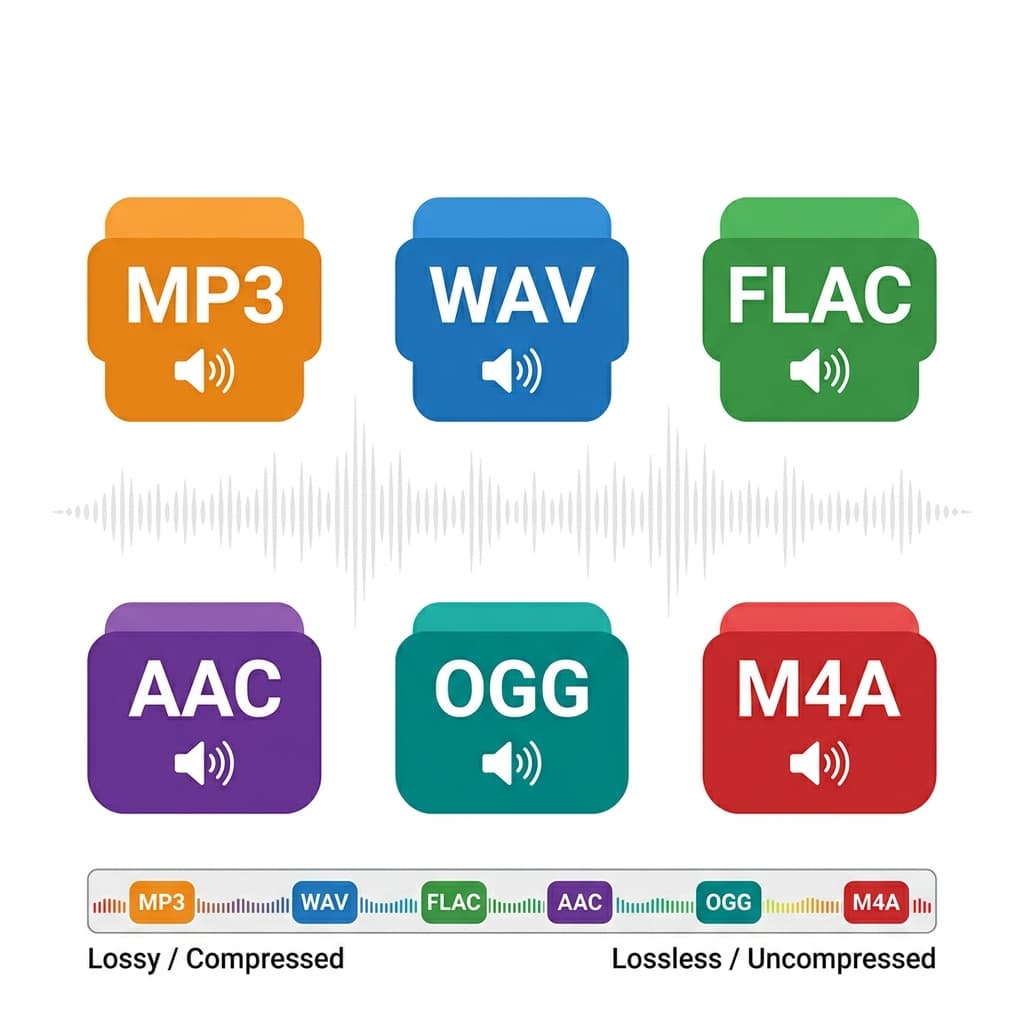
MP3, WAV, FLAC, AAC: Which Audio Format Should You Use?
MP3, WAV, FLAC, AAC, OGG and M4A compared in one table, with the format to pick for podcasting, streaming, editing and archiving.
Audio Editing Glossary: 40 Terms Every Content Creator Needs to Know
Audio editing glossary with 40 terms: bitrate, normalization, clipping, EQ, compression and more, defined plainly for podcasters and creators.

How to Record Audio on Your Phone with Better Quality
Learn how to record better audio on your phone. Setup tips, app choices and how to edit the result directly in your browser — free.
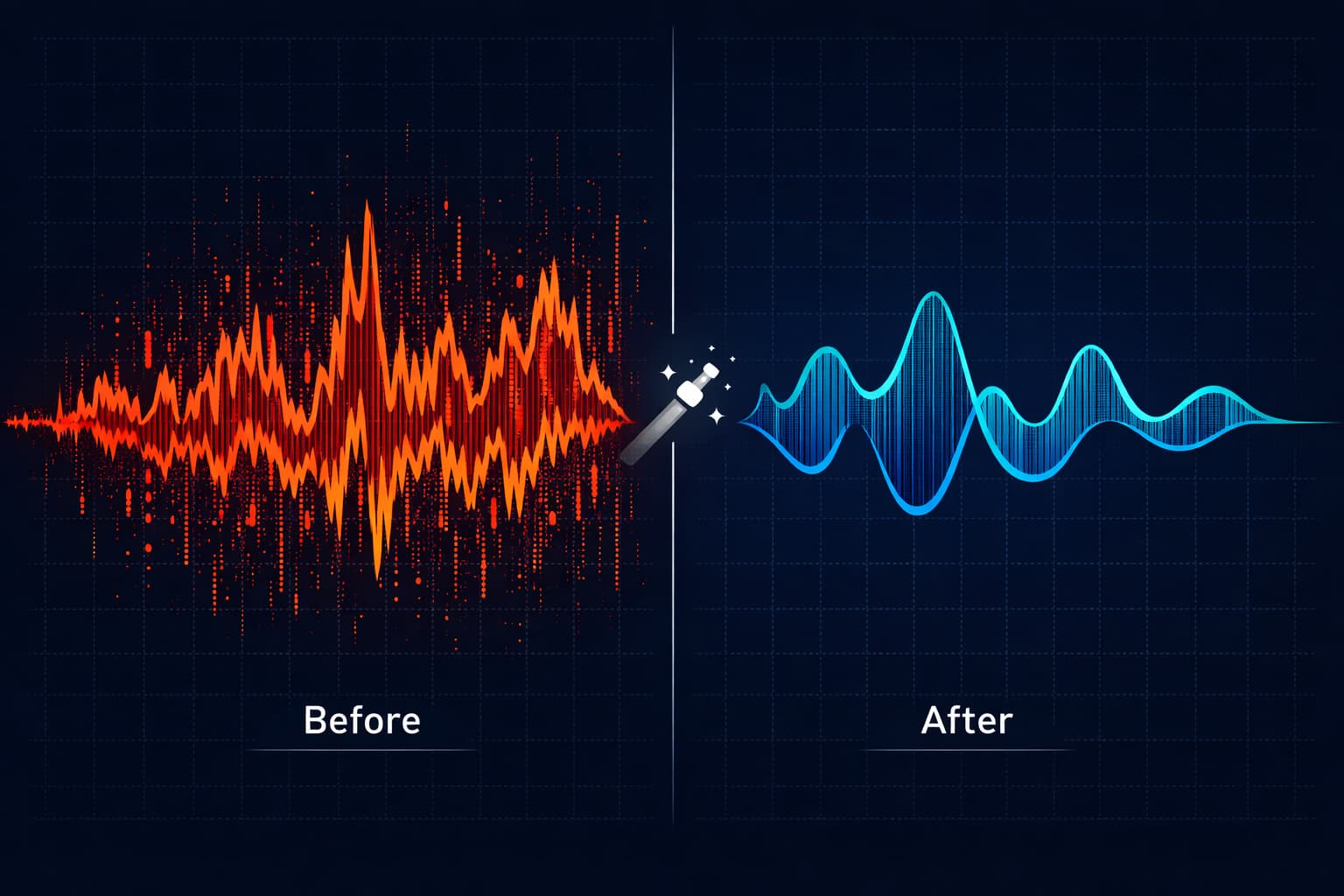
Audio Noise Filters: Reduce Rumble and Hiss Online
Learn how high-pass and low-pass filters can reduce low rumble and high hiss, what they cannot remove, and how to protect speech while filtering.
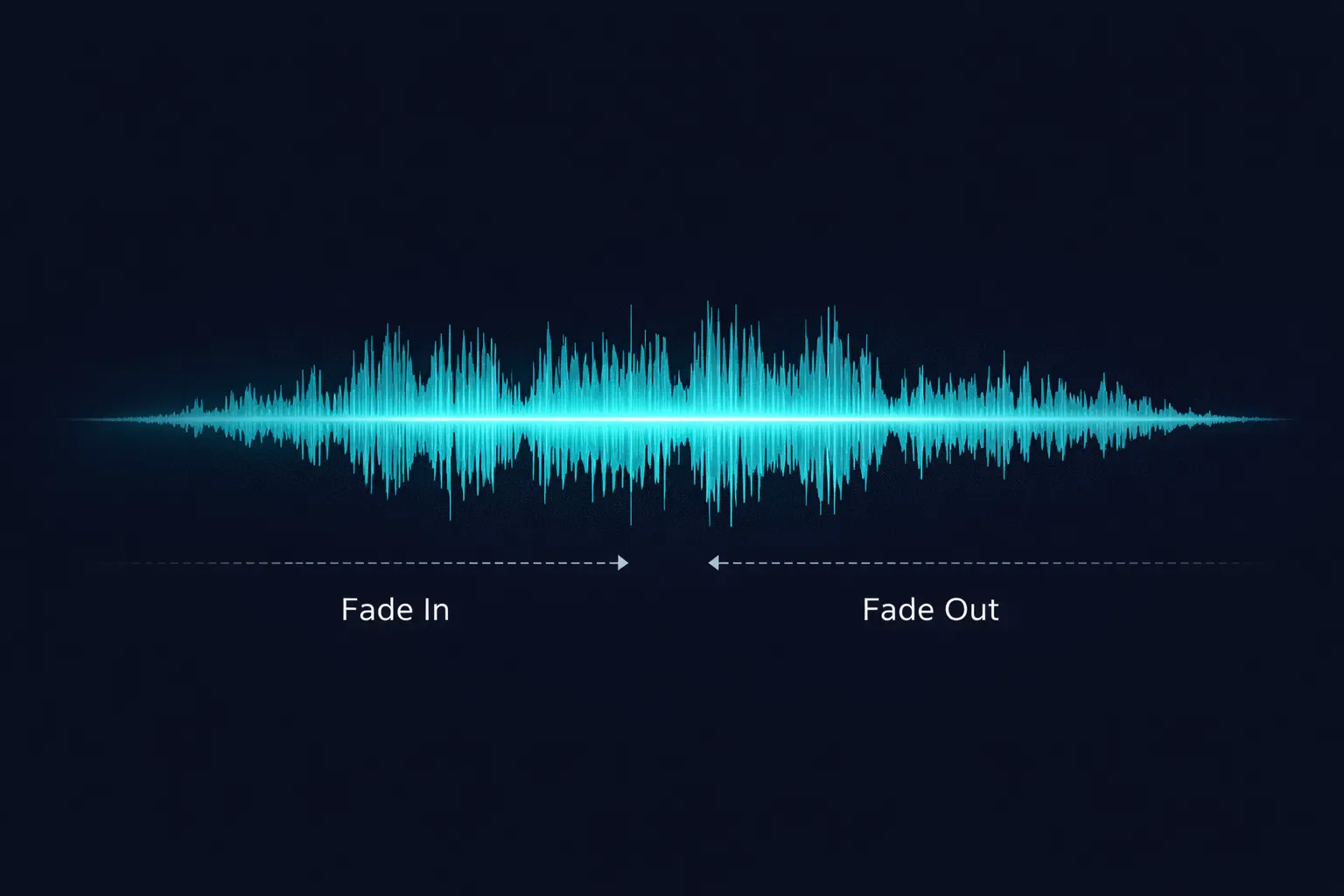
Audio Fade In and Fade Out: Smooth Transitions in Practice
Learn to apply linear fade in and fade out up to 10 seconds, choose duration, and understand why a true crossfade requires a multitrack editor.
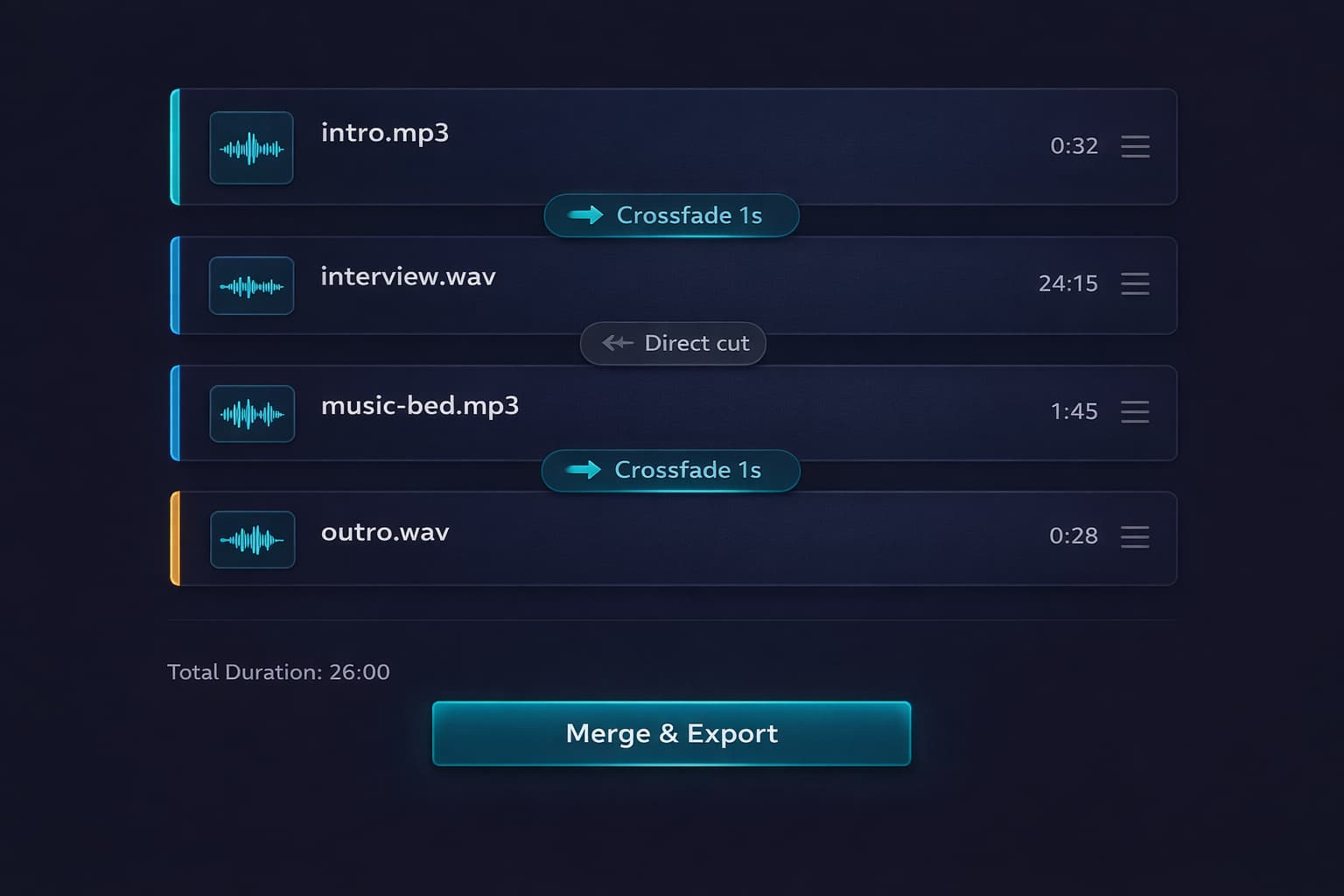
How to Join Audio Clips Without Volume Jumps, Gaps or Clicks
Prepare clips before you join them: match levels, trim the edges, pick the order and know when a sequential join is enough and when you need a multitrack mix.
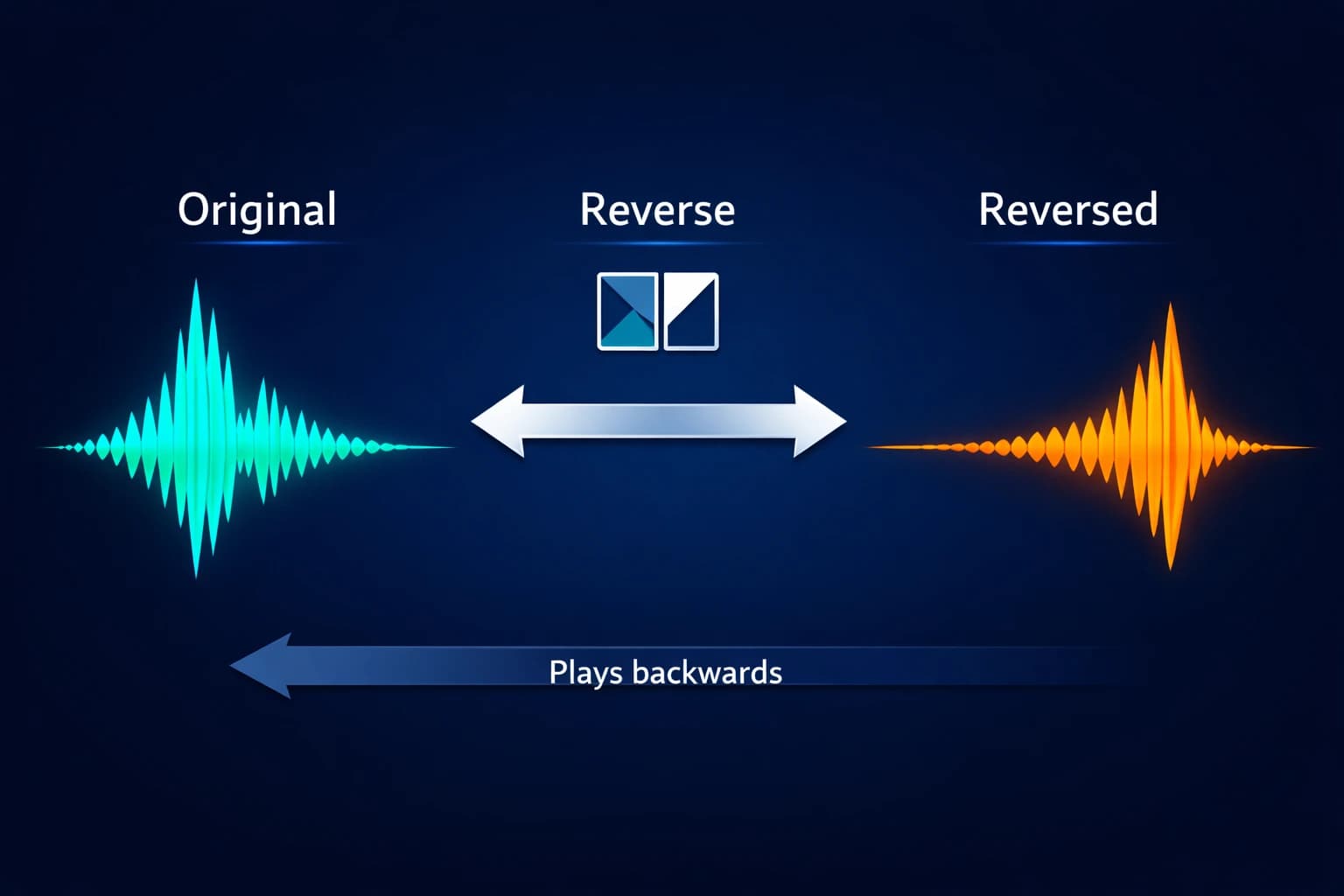
How to Reverse Audio Online: Reversed Audio and Backmasking
Learn how to reverse audio online for free. Practical guide covering reverse reverb techniques, backmasking history, real use cases and common mistakes.
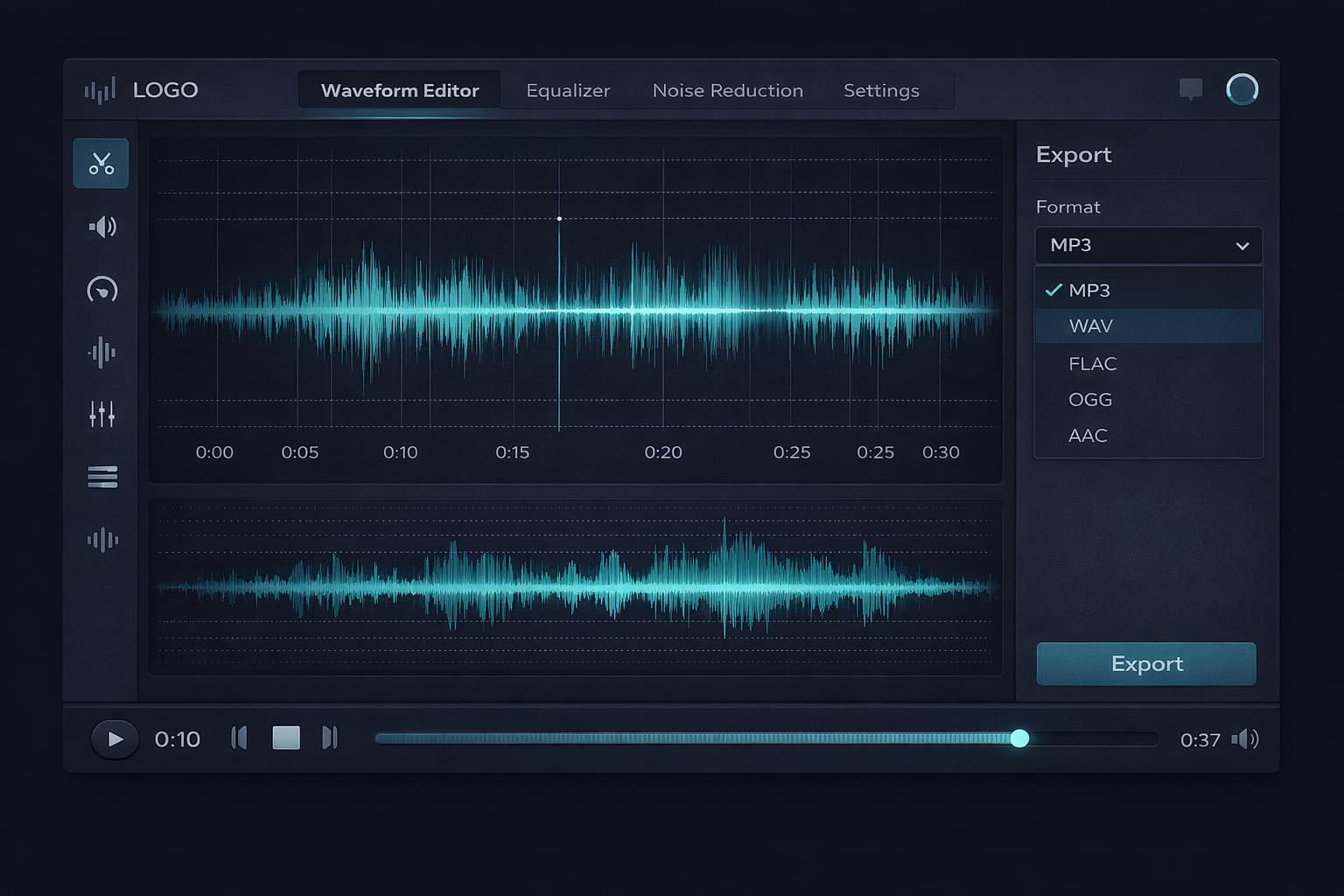
How to Edit an Audio File Step by Step: A Browser Workflow
The order that keeps edits clean: cut first, then fix noise, balance EQ, set the level and export once. Each step links to the tool that does it.
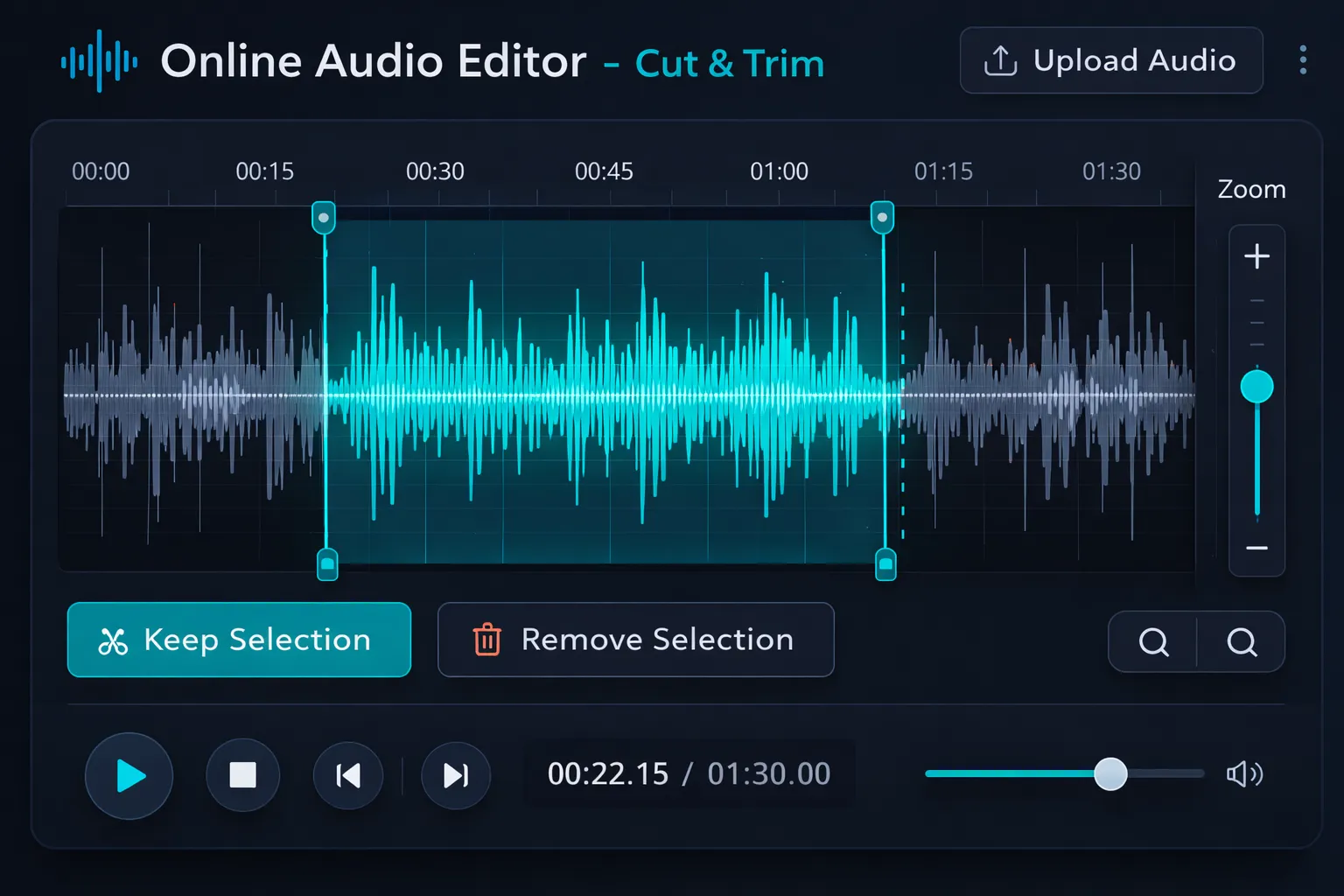
How to Cut Audio Without Clicks: Boundaries, Zoom and Microfades
Why a cut clicks, where to place the boundary, when a 5 ms microfade helps and how to check the join before you export the trimmed file.
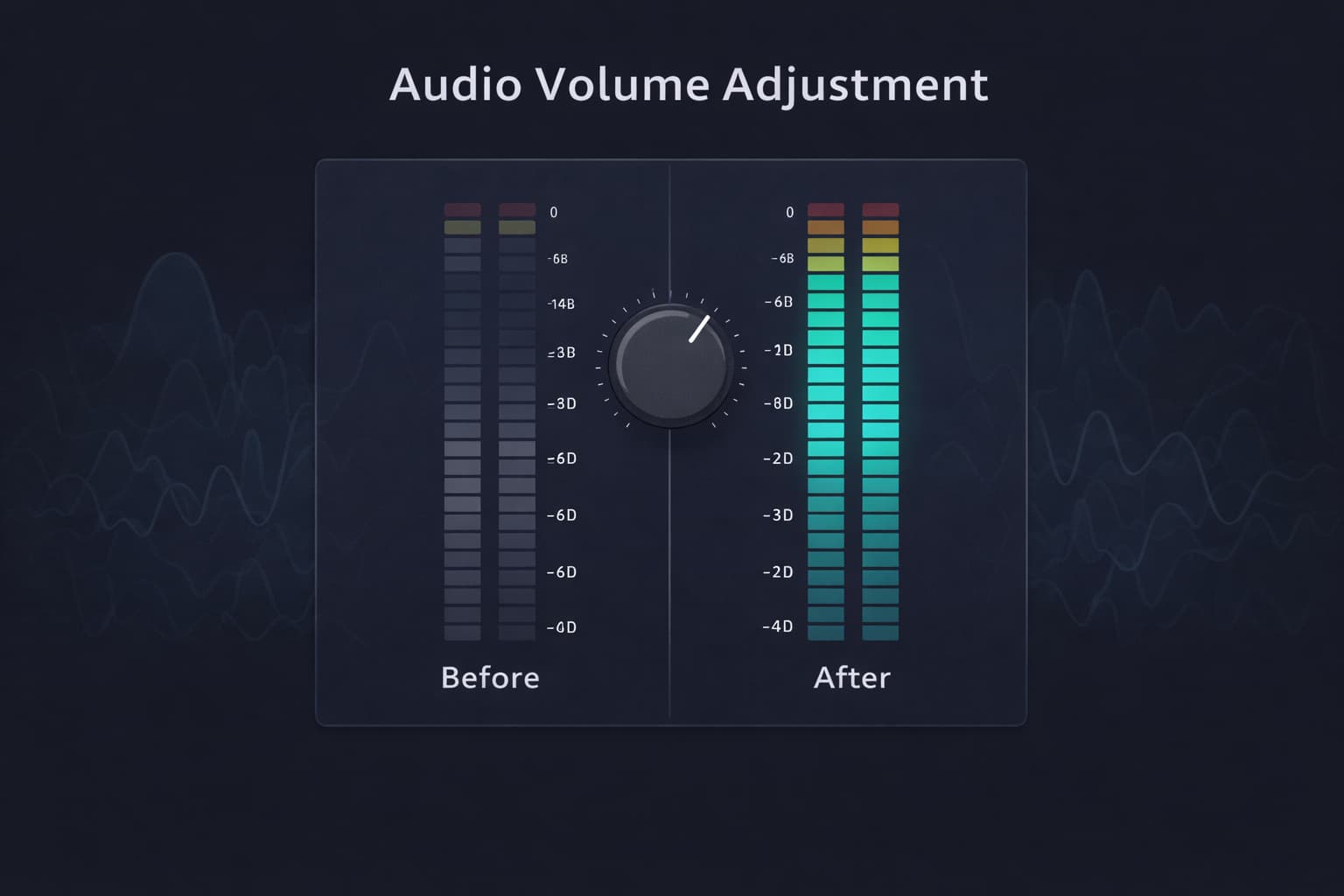
How to Adjust Audio Volume Online without Distortion
Learn to set gain from 0 to 200% and normalize sample peak to -1 dBFS while distinguishing peak, LUFS, true peak and clipping.
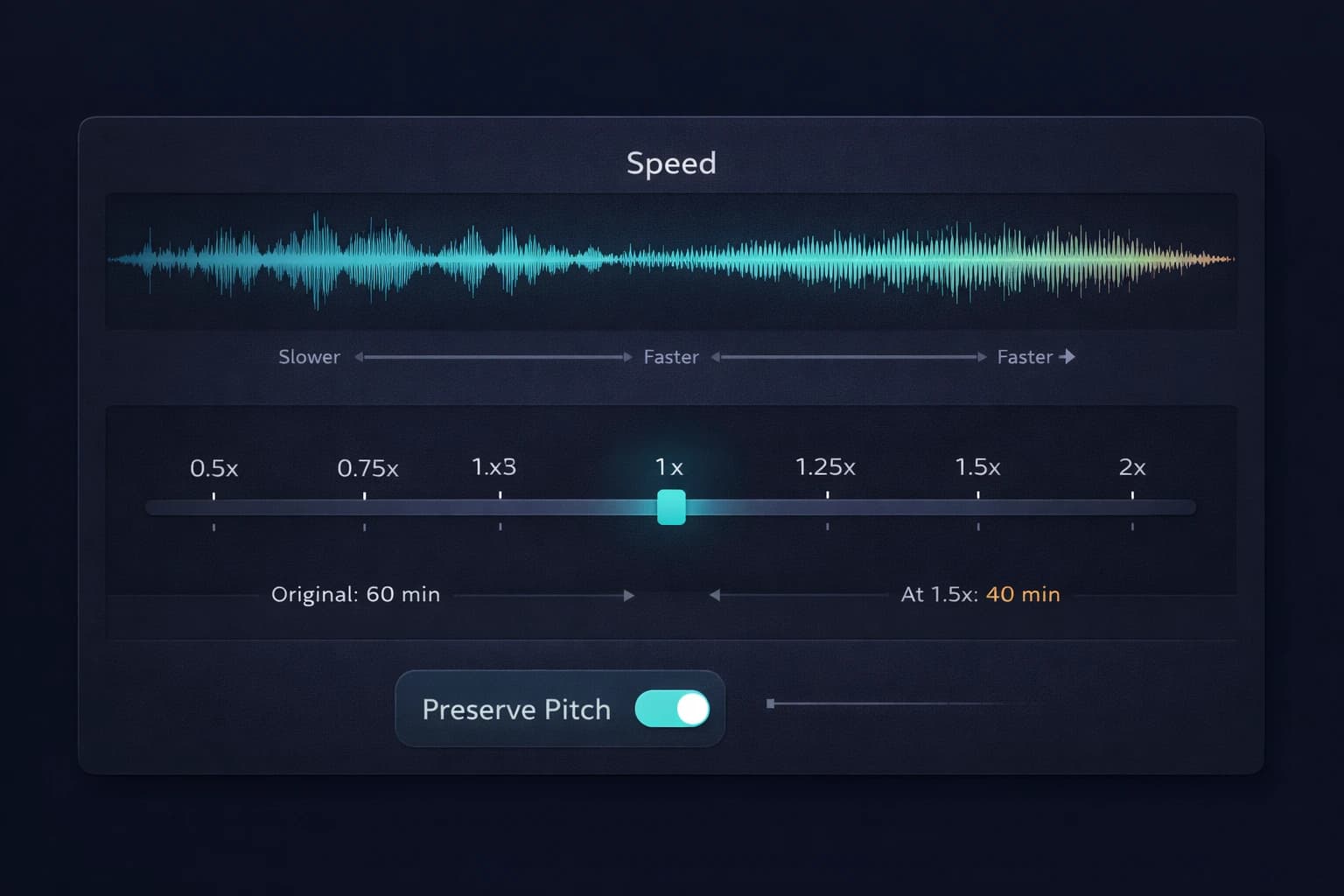
How to Change Audio Speed Online without Changing Pitch
Learn to change speed from 0.5x to 3x with pitch preservation, preview the result, and recognize time-stretching and export artifacts.
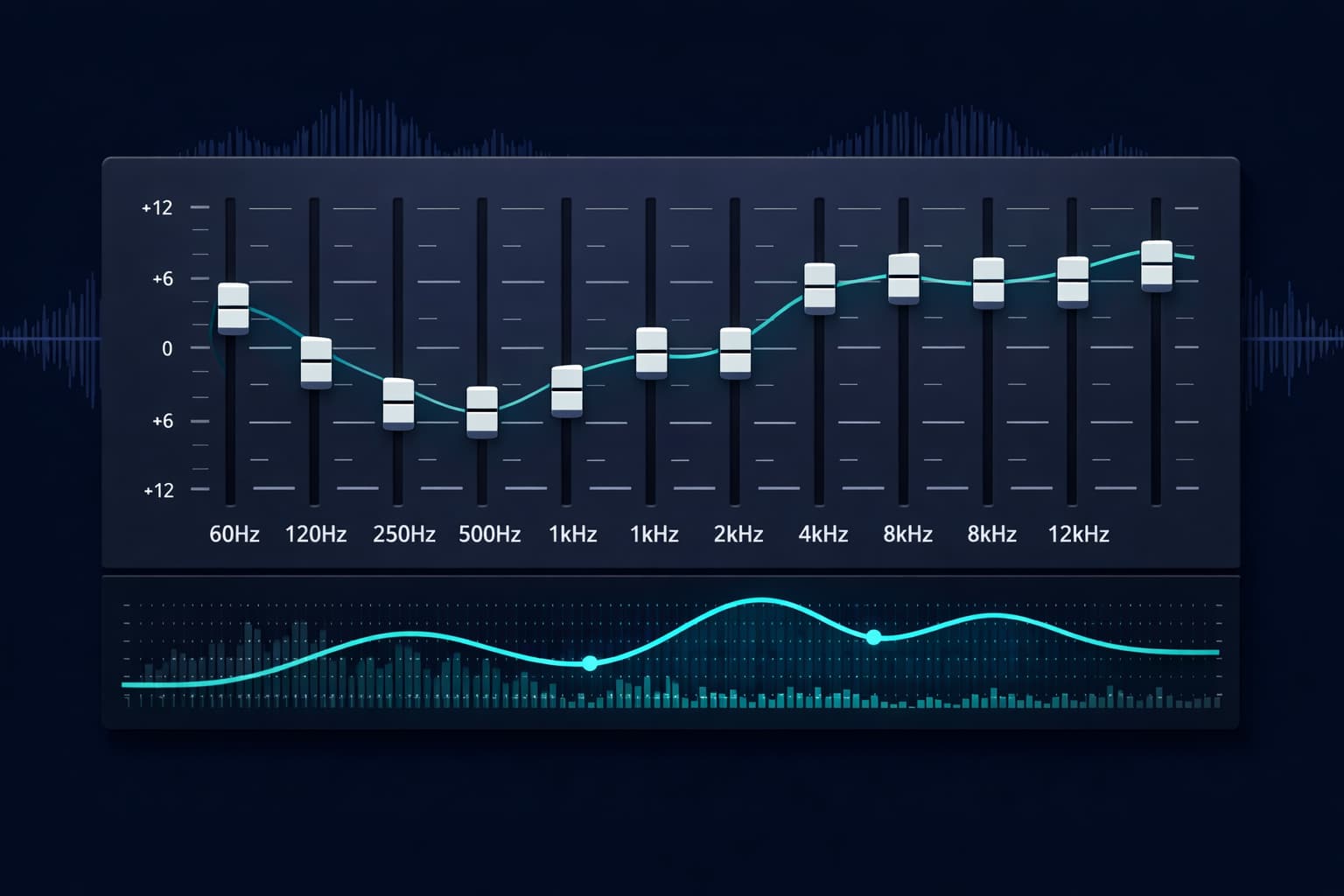
Audio Frequency Ranges Explained: What Each EQ Band Changes
What sub-bass, bass, low mids, mids, presence and air sound like, which problems live in each range and why fixed bands limit precise corrections.
Learn Everything About Online Audio Editing
Welcome to the Audio-Editor Online blog. Here you will find detailed tutorials, technical concepts explained in plain language, and practical procedures for using the browser tools.
Articles separate general audio concepts from features actually available in the editor, document known limits, and explain when a specialized tool is more appropriate.
Editorial standards
Guides are organized by task and reviewed when tool behavior changes. We distinguish real interface captures from conceptual illustrations and connect each article to the most relevant next steps instead of creating pages only to repeat keywords.